Strength Training During Menopause: Benefits, Risks, and How to Start
"Menopause can change how your body feels, performs, and recovers. Strength training can help protect muscle, support bone health, improve confidence, and make everyday life feel easier."
Strength Training During Menopause: Benefits, Risks, and How to Start
Menopause often brings changes that can feel frustrating and hard to explain. You may notice less strength, more body aches, lower energy, slower recovery, or weight gain that does not respond the way it used to. That is not laziness, and it is not “just ageing.”
One of the most useful things you can do during this stage is strength training. Done well, it can help you keep muscle, support bone health, improve day-to-day function, and build more confidence in your body again.
This article breaks down what strength training for menopause actually helps with, what to watch out for, and how to get started in a way that feels realistic.
Quick Answer
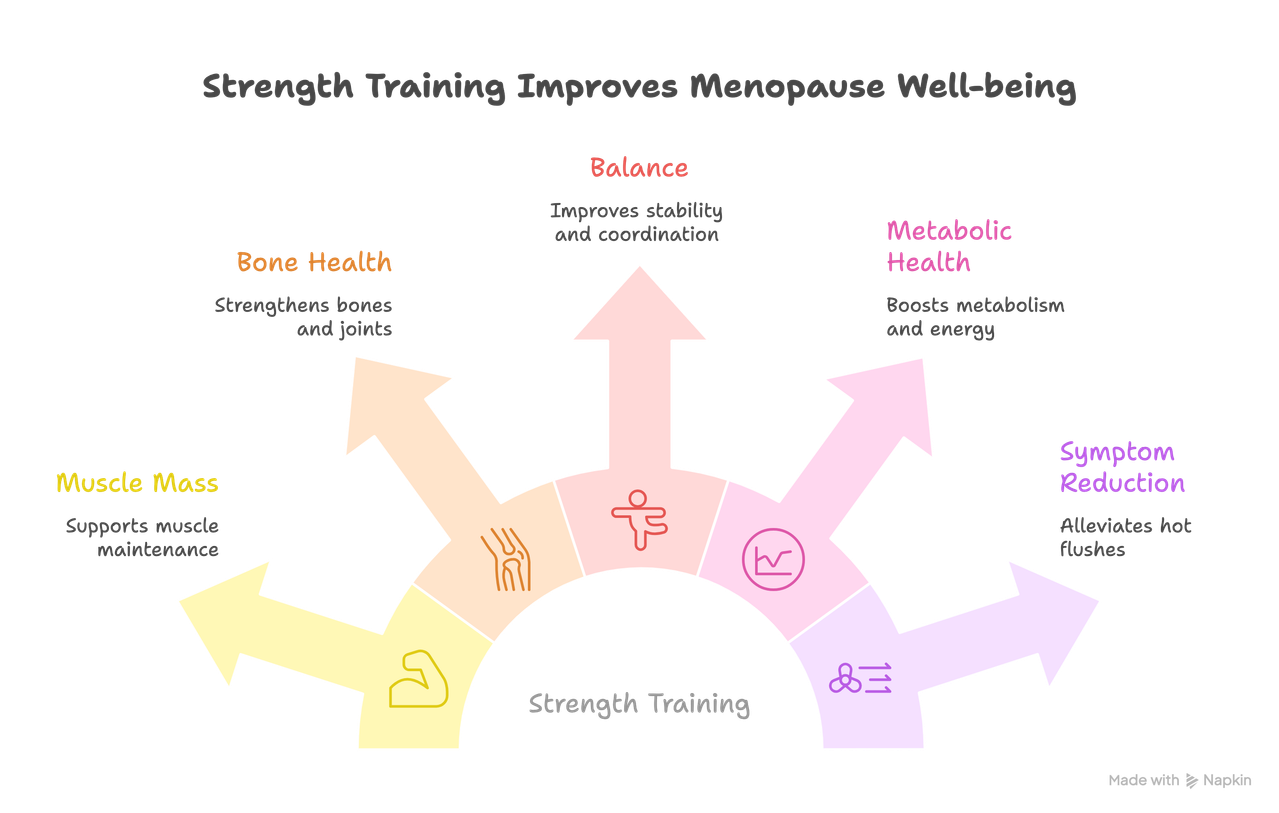
Strength training during menopause can help support muscle mass, strength, bone health, balance, metabolic health, and everyday function. Research also suggests it may help reduce some menopause symptoms, including hot flushes, while improving overall physical wellbeing.
Why strength training matters more during menopause
As oestrogen declines, the body becomes more likely to lose muscle and bone over time. That matters because muscle is not just about appearance. It supports your joints, helps you stay steady on your feet, improves how you move, and plays a role in blood sugar control and long-term health.
Bone health matters too. After menopause, bone loss can speed up, which raises the risk of osteopenia, osteoporosis, and fractures. General activity is still valuable, but bone responds best when it gets a meaningful training signal. That usually means some form of resistance training, impact work, or both, depending on the person.
This is why many women find that the old advice to “just walk more” is helpful but incomplete. Walking is great for general health, but it is usually not enough on its own to maintain strength and bone density as effectively as a structured strength programme.
The biggest benefits of strength training for menopause
1. It helps you hold on to muscle and strength
One of the most common changes in menopause is feeling weaker than before, even if body weight has not changed much. Strength training gives your body a reason to keep muscle and improve how that muscle performs.
That matters in everyday life. Carrying groceries, lifting kids or grandkids, getting off the floor, climbing stairs, and staying independent all rely on strength.
A growing body of research shows resistance training can improve strength, physical function, and body composition in postmenopausal women.
2. It supports bone health
This is one of the strongest reasons to include resistance training during and after menopause.
Bone needs load to stay strong. Exercises that challenge your muscles and skeleton, especially when done progressively, can help maintain or improve bone mineral density. Research in postmenopausal women shows exercise can have a positive effect on bone density, and supervised high-intensity resistance and impact training has shown promising results for bone strength and function in women with low bone mass.
That does not mean everyone needs to jump straight into heavy barbell training. It means your programme should eventually include enough resistance to feel like true strength work, not endless light weights that never progress.
3. It may help with body composition and metabolic health
Menopause often comes with a shift toward more abdominal fat and reduced insulin sensitivity. Strength training can help by preserving or increasing lean mass, which supports metabolic health over time.
This does not mean lifting weights “boosts metabolism” in some magical way. It means more muscle and regular training can improve how your body handles energy, activity, and blood sugar.
4. It may reduce some menopause symptoms
Strength training is not a cure for menopause, but it may help with some symptoms.
Research suggests resistance training may help reduce hot flush frequency and improve general wellbeing in some women.
That is a good example of where realistic expectations matter. Strength training will not solve every symptom for every person, but it can be a very useful part of the bigger picture.
5. It improves confidence, balance, and everyday function
A lot of people start strength training because they want to lose weight. Many stay with it because they feel more capable.
Better balance. Better posture. Less fear of hurting yourself. More confidence using your body. These changes often matter just as much as the physical ones, especially if you have felt disconnected from your body during the menopause transition.
What strength training should actually look like
For most adults, a good menopause strength plan is simple.
You do not need six days per week. You do not need complicated periodisation charts. You do not need to train like an athlete.
A solid plan usually includes:
Full-body training 2 to 4 times per week
Two or three well-structured sessions per week is enough for many people to make meaningful progress.
Basic movement patterns
Most useful strength plans include some version of:
- squat
- hinge
- push
- pull
- carry
- core stability
These can be done with body weight, dumbbells, kettlebells, machines, cables, or barbells.
Progressive overload
This simply means making training a bit more demanding over time. That could mean more load, more reps, better control, or more confidence with the same exercise.
Without progression, the body has no reason to adapt.
Enough effort to count
A lot of women have spent years doing circuits with tiny dumbbells and never getting stronger. Strength training should feel like training. Not reckless. Not punishing. But challenging enough that the last few reps require effort and focus.
How to start safely
The safest plan is usually not the lightest plan. It is the best-matched plan.
Start with your current capacity, your injury history, and your confidence level. Then build gradually.
A good starting point might be:
- 2 strength sessions per week
- 4 to 6 exercises each session
- 2 to 4 sets per exercise
- a weight you can control with good form
- 1 to 3 reps left “in the tank” by the end of each set
If you are completely new, machine-based and dumbbell exercises are often a good place to begin. If you already train, you may benefit from more structured loading and heavier compound lifts.
If you have pelvic floor symptoms, prolapse concerns, osteoporosis, significant joint pain, or you are returning after a long break, it is worth getting individual guidance. Many people can still strength train safely, but exercise choice, technique, breathing, and progression matter more.
Common mistakes to avoid
Doing too much cardio and not enough resistance work
Cardio is good for health, but it should not replace strength work if your goal is to support muscle and bone during menopause.
Staying too light forever
There is a place for gentle starts. There is not much benefit in never progressing beyond “comfortable.”
Chasing soreness instead of consistency
You do not need to destroy yourself. You need a plan you can repeat.
Ignoring recovery basics
Sleep, protein intake, and total life stress all affect how well you respond to training.
For protein, many experts suggest older adults and midlife women who are training may benefit from a higher intake than the basic minimum, often around 1.2 to 2.0 g per kg of body weight per day depending on the person and context.
Creatine monohydrate may also be worth considering for some women, particularly if strength, muscle function, and healthy ageing are priorities. The evidence is promising, although it is not essential for everyone and should be considered in the context of the whole plan.
Final Thoughts
Strength training for menopause is not about proving anything in the gym. It is about giving your body a reason to stay strong, capable, and resilient.
For many women, this phase of life is exactly when strength training becomes more valuable, not less. It can help you protect muscle, support bone health, improve confidence, and feel more like yourself again.
You do not need the perfect plan. You need a sensible one that you can do consistently, progress gradually, and recover from well.
Common Inquiries on this Topic
FAQ Section
Is strength training safe during menopause?
Yes, for most people it is. The key is matching the training to your current level, health history, and symptoms. If you have osteoporosis, pelvic floor symptoms, significant pain, or a history of fractures, get tailored advice before pushing intensity.
How many times a week should I do strength training during menopause?
Two sessions per week is a strong starting point. Many people do well with two to four sessions depending on experience, recovery, and schedule.
Can strength training help with menopause weight gain?
It can help, especially by supporting muscle mass, activity levels, and metabolic health. But it is not a magic fix. Nutrition, sleep, stress, and overall activity still matter.
Will lifting weights make me bulky?
For most women, no. Building large amounts of muscle is difficult and takes a lot of time, food, and training volume. Most people become stronger, firmer, and more capable rather than “bulky.”
What if I have joint pain or feel deconditioned?
You can still train. Start with simpler exercises, controlled ranges, and manageable loads. Machines, dumbbells, supported positions, and isometric work can all be useful depending on the issue.
References & Clinical Sources
References
- The World Health Organization. WHO Guidelines on Physical Activity and Sedentary Behaviour. 2020.
- The Menopause Society. Management of Osteoporosis in Postmenopausal Women: 2021 Position Statement.
- Watson SL, Weeks BK, Weis LJ, et al. High-Intensity Resistance and Impact Training Improves Bone Mineral Density and Physical Function in Postmenopausal Women With Osteopenia and Osteoporosis: The LIFTMOR Randomized Controlled Trial. Osteoporosis International. 2018.
- Mohebbi R, et al. Exercise Training and Bone Mineral Density in Postmenopausal Women: A Systematic Review and Meta-Analysis. 2023.
- Capel-Alcaraz AM, et al. The Efficacy of Strength Exercises for Reducing the Symptoms of Menopause: A Systematic Review. 2023.
- Sá KMM, et al. Resistance Training for Postmenopausal Women: A Systematic Review. 2023.
- Smith-Ryan AE, et al. Creatine Supplementation in Women’s Health: A Lifespan Perspective. Nutrients. 2021.

H. Richards
Personal TrainerWith over 20 years of experience coaching high performers, H. Richards delivers precision training frameworks built on evidence and practical application. His approach cuts through the noise to help you achieve sustainable results, backed by consistently excellent 5-star client reviews.
Explore Coaching ProgramsIf you want help building a realistic strength plan for menopause, get in touch and we can help you find an approach that fits your body, your schedule, and your current starting point.
Take our 2-minute assessment to evaluate your current protein intake and training consistency.
Take the Free AssessmentRelated Guides & Protocols
 General
Menopause Nutrition & Strength Training: How to Fuel, Lift, and Protect Muscle After 40
Combat anabolic resistance, protect bone density, and manage midlife visceral fat with our coach-led menopause nutrition and joint-safe lifting guide.