Is It Worth Hiring a Personal Trainer? An Honest Answer
"Deciding whether to hire a personal trainer comes down to maths, accountability, and proper prescription. Here is an honest look at what coaching delivers and whether you need it."
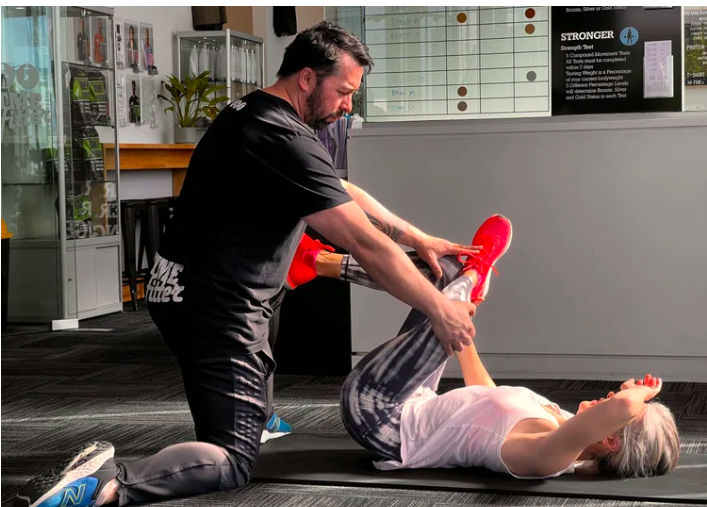
If you are asking whether hiring a personal trainer is worth the financial investment, you are probably doing the maths. Most people get burned because they spend money on an expensive rep-counter when what they actually need is an intelligent training prescription that protects their joints, fits their schedule, and delivers sustainable progress.
Key Takeaway: A personal trainer is worth the investment if you lack consistent accountability, carry previous injuries, or need an individualised programme to protect lean muscle during significant weight loss. If you already understand progressive overload, train consistently, and manage your own recovery, you do not need one.
What You Are Actually Paying For (Beyond the Sweat)
A personal trainer should provide an intelligent, adaptive training prescription rather than just an exhausting workout. Anyone can make you tired or run you through a circuit until you feel sick. That is the lowest-value version of the fitness industry.
Real coaching is not about seeing how much punishment your body can tolerate. It is about finding the precise amount of mechanical work your tissues can handle and adapt to today, so you can train again next week without breaking down.
When you invest in legitimate coaching, you are paying for three core pillars:
- Diagnostic Assessment: Evaluating your current movement patterns, joint mobility, past injuries, and recovery capacity before prescribing a single loaded exercise.
- Individualised Prescription: Selecting the specific exercise variations, sets, reps, and tempos that match your body and your work schedule.
- Objective Progression: Systematically adjusting training variables over time so you continue building strength without plateauing or getting hurt.
Generic Workouts vs Individualised Coaching
The difference between generic exercise delivery and individualised coaching comes down to how well the programme adapts to your body. Generic workouts treat every person like an uninjured 22-year-old athlete, whereas structured coaching builds around your real-world physical history.
| Generic Workout Delivery | Grounded, Individualised Coaching |
|---|---|
| Focuses purely on sweat, fatigue, and calorie burn | Focuses on appropriate mechanical tension and adaptation |
| Forces every client into standard barbell squats or deadlifts | Modifies movement angles and loading to protect joint history |
| Follows a static, unyielding weekly template | Calibrates training volume to daily energy and recovery |
| Aims to keep you reliant on sessions for basic motivation | Teaches movement competence to build long-term independence |
For example, imagine an 80 kg individual returning to training after a decade of desk work with limited ankle mobility and an old disc bulge. Placing a heavy barbell on their back because squats are considered a "good exercise" is poor coaching. The squat is not broken—the prescription is. Swapping to an elevated goblet box squat removes the lumbar shear, builds quadriceps capacity safely, and allows progressive loading without joint flare-ups.
The Economics: Does Coaching Make Financial Sense?
Coaching makes financial sense when the cost of professional direction is lower than the compounding cost of recurring injury, wasted memberships, or ineffective routines. In New Zealand, coaching models generally sit across three primary formats:
- 1:1 In-Person Personal Training: Typically ranges from $50 to $100+ NZD per session. At WRK in Christchurch, structured 1:1 sessions are delivered at $55 NZD per session on a school-term model, specifically built around your schedule and physical baseline. This format is ideal for beginners or those working through active joint limitations who require real-time, hands-on feedback.
- Hybrid Coaching: Combines regular in-person technical sessions with structured weekly delivery through a training app, sitting between $70 and $125 NZD per week. This gives you direct technical coaching alongside independent execution.
- Structured Online Coaching: Delivers custom programming, video form feedback, and weekly check-ins via the WRK training app for roughly $35 to $70 NZD per week (+ $99 onboarding). This suits busy professionals who know how to move but require high-level programming and external accountability without rigid appointment slots.
If six months of unguided training leaves you with persistent joint pain and zero changes in physical capacity, hiring a professional up front saves both time and medical expenses.
The Specialist Layer: Why Coaching Matters During GLP-1 Weight Loss
A coach is particularly valuable during GLP-1 weight loss because the medication creates a calorie deficit that risks muscle loss if resistance training and nutrition are neglected.
Medications like Ozempic, Wegovy, and Mounjaro manage appetite signals and help make weight reduction achievable. However, the medication does not discriminate between fat mass and functional muscle tissue. Recent clinical research shows that lean mass reduction occurs during significant weight loss across all interventions, not just pharmacotherapy.
When your food intake drops rapidly, your margin for training error becomes razor-thin:
- The Medication's Role: Helps establish the energy deficit required for weight loss.
- Nutrition's Role: Provides the raw materials to support muscle repair, with practical protein targets sitting between 1.2 and 1.6 g per kg of body weight daily (or adjusted target weight).
- Strength Training's Role: Delivers the unmistakable mechanical stimulus telling your central nervous system to retain contractile muscle and bone density.
- The Coach's Role: Balances training volume against reduced energy intake so you build strength rather than digging into chronic fatigue.
Smashing an under-fuelled body with exhausting circuits does not preserve muscle; it accelerates fatigue and impairs recovery. A specialist coach prescribes the minimum effective dose: 2 to 3 focused full-body resistance sessions per week based on fundamental human movement patterns (squat, hinge, push, pull, carry, and brace).
The Bottom Line
A personal trainer is not an absolute requirement for fitness, and you do not automatically need one simply because you want to lose weight. If you have the knowledge to build a programme, manage progressive overload, and train consistently, you can achieve excellent results on your own. However, if you are navigating injuries, struggling with adherence, or taking a GLP-1 and want to ensure you lose fat without sacrificing strength, a skilled coach turns guesswork into a repeatable system. Consistency always beats complexity.
Recommended Next Step
- Calculate Your Daily Baseline: Use the WRK Calorie & Macro Calculator to determine your optimal starting targets for sustainable fat loss.
- Evaluate Your Training Readiness: Take the free 2-minute Weight Loss Safety Assessment to identify your movement baseline and muscle preservation strategy.
- Explore Structured Coaching: Learn how our 1-on-1 personal training in Christchurch and flexible Online Coaching programmes fit into your life.
Common Inquiries on this Topic
Frequently Asked Questions
Is a personal trainer worth it for weight loss?
A personal trainer can be valuable during weight loss because they can structure resistance training around your current ability, help you progress safely and adjust the programme as your circumstances change. If you're using a GLP-1 medication, the trainer's role isn't to compete with the medication's effect on appetite and weight loss, but to help you maintain strength, muscle and physical capacity while you lose weight.
Do I need a personal trainer if I'm taking Ozempic, Wegovy or Mounjaro?
Not necessarily. You don't need a personal trainer simply because you're taking a GLP-1 medication. However, coaching can be particularly useful if you're new to resistance training, have previous injuries or movement limitations, aren't sure how hard to train, or want help building a programme that progresses appropriately throughout your weight-loss journey.
Can exercise prevent muscle loss while taking a GLP-1?
No exercise programme can guarantee that muscle will be completely preserved during weight loss. However, resistance training is an important strategy for supporting muscle and strength during weight loss. Research suggests that combining resistance training with appropriate nutrition can produce a more favourable body-composition outcome than relying on weight loss alone.
Should I lift heavy weights while taking a GLP-1?
Not automatically. Resistance training is important, but the appropriate training load depends on your experience, movement ability, strength, recovery and goals. If you're new to training, starting with a manageable resistance and progressively increasing the challenge may be more appropriate than immediately lifting heavy weights.
What if I've never done strength training before?
That's completely fine. You don't need to be experienced before starting. A good programme should begin with exercises and training loads that match your current ability, then progressively develop your strength, movement quality and confidence.
Can I exercise if I have an injury or physical limitation?
Often, exercise can be adapted around an injury or limitation, but the appropriate approach depends on the individual situation. A trainer should work within their scope of practice and involve your GP, physiotherapist or other healthcare professional where appropriate.
Do I need to train every day to preserve muscle?
No. More training isn't automatically better. An effective programme provides an appropriate training stimulus while allowing enough recovery for your body to adapt. The right frequency depends on your training experience, goals, schedule and recovery capacity.
Can I use an app instead of a personal trainer?
Yes. An app can be an excellent way to deliver a structured programme. The important question is whether the programme is appropriate for you and whether it can be adapted as you progress. Personal coaching adds individual assessment, programming decisions, feedback and adjustment that a generic programme may not provide.
What does a GLP-1 fitness coach actually do?
A GLP-1 fitness coach helps translate your current situation into an appropriate training strategy. That can include assessing your starting point, selecting suitable exercises, managing training volume and intensity, progressively developing strength and fitness, adapting sessions around physical limitations and helping you build habits that can continue after your weight-loss phase.
Important note
This article is for general educational purposes and is not medical advice. GLP-1 medications should be used under the supervision of your prescribing healthcare professional. If you have a medical condition, significant symptoms, an injury or concerns about your ability to exercise, seek appropriate clinical advice before changing your exercise programme.
References
Eisa N, Barood O. Lean Mass Changes With Incretin Therapy Versus Lifestyle Intervention: A Systematic Review and Meta-Analysis of Randomised Controlled Trials. Diabetes, Obesity and Metabolism. 2026.
Muscle health in the modern era of incretin-based therapies. 2025.
Optimizing Weight Loss in the GLP-1 Era: Preserving Muscle Mass, Function and Metabolic Health Through Precision Nutrition and Resistance Training. 2026.
Effect of resistance exercise on body composition, muscle strength and cardiometabolic health during dietary weight loss in people living with overweight or obesity: A systematic review and meta-analysis. BMJ Open Sport & Exercise Medicine. 2025.
Effect of glucagon-like peptide-1 receptor agonists and co-agonists on body composition: Systematic review and network meta-analysis. 2024.
Incretin-Based Weight Loss Pharmacotherapy: Can Resistance Exercise Optimize Changes in Body Composition? 2024.
H. Richards
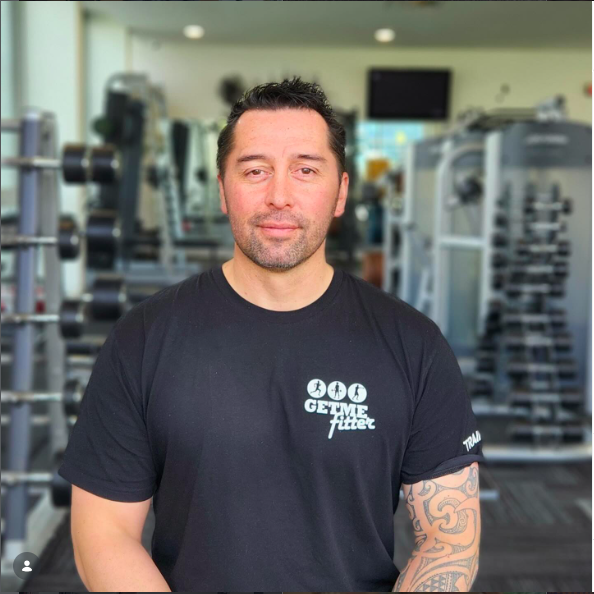
Personal TrainerWith over 20 years of experience coaching high performers, H. Richards delivers precision training frameworks built on evidence and practical application. His approach cuts through the noise to help you achieve sustainable results, backed by consistently excellent 5-star client reviews.
Explore Coaching ProgramsTake the WRK Fitness Assessment
Take our 2-minute assessment to evaluate your current protein intake and training consistency.
Take the Free Assessment